Nursery textiles · Care and safety
A Caregiver’s Guide to Choosing Breathable Nursery Layers
A nursery can invite elaborate plans: the softest knit, the gentlest color, a little extra warmth for the cool hours before dawn. But when an infant is sleeping, the most important textile decision is often what not to put in the sleep space. Choosing breathable nursery layers means considering fiber and construction for clothing and supervised use, while keeping the sleep environment consistent with current safe-sleep guidance.
Start with the purpose of the layer
“Nursery textile” covers several different things: a baby’s clothing, a wearable blanket, a cover used while an adult is holding the infant, and the bedding or soft furnishings that make a room feel finished. They may look similar in a drawer, but they do not have the same job. A soft blanket can be suitable for a caregiver’s lap or a living-room chair and still be unsuitable for an infant’s sleep space.
That distinction is a useful place to begin. For sleep, follow current guidance from recognized health authorities and your child’s healthcare professional. In general, an infant should be placed on their back on a firm, flat, non-inclined sleep surface, with a fitted sheet and no loose blankets, pillows, quilts, comforters, stuffed toys, or other soft objects in the sleep area. A wearable blanket or sleep sack may be an option when used according to its instructions and the applicable guidance; it is clothing, not a loose blanket, and should fit properly without covering the baby’s face or head.
Rules and recommendations can be updated, and individual circumstances differ. Consult your local public-health guidance and pediatric clinician, particularly if your baby was born prematurely or has medical needs. A product description, fiber label, or claim about breathability does not replace safe-sleep advice.
What “breathable” can—and cannot—tell you
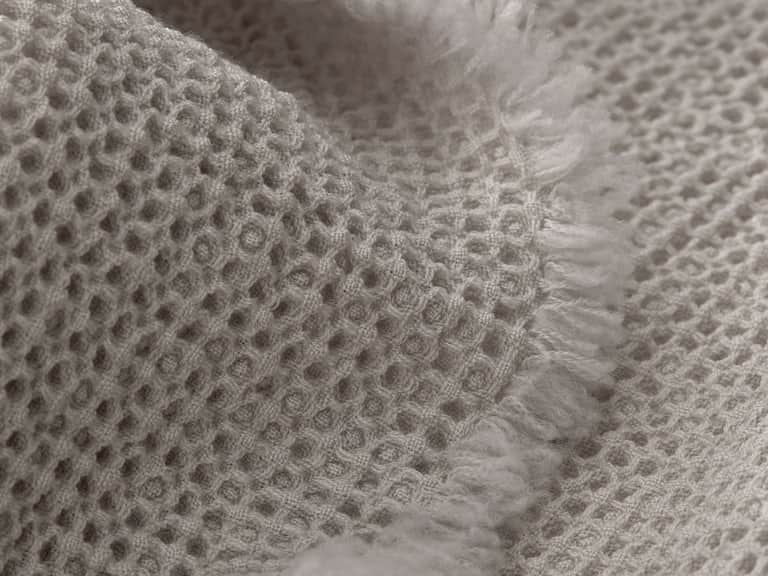
Breathability is a useful word, but not a complete safety rating. In textiles, it usually refers to how readily air and water vapor move through a fabric. Fiber, yarn thickness, knit structure, finishing, and the number of layers all affect that movement. A fine, open knit may feel airy in the hand; a dense, brushed fabric may feel warmer and less airy. Yet no single adjective can tell a caregiver whether a particular garment is right for a particular infant or sleep setting.
Temperature comfort depends on more than fabric. The room, the baby’s clothing, the fit of the garment, the infant’s age and health, and the length of time it is worn all matter. A “lightweight” description is not a guarantee that an item will prevent overheating, and a “natural” fiber is not automatically safer than a synthetic one. Fiber information is one part of the decision; the item’s intended use, construction, fit, and care instructions matter too.
It helps to think of breathability as a material characteristic, not a promise. Look for clear labeling and instructions. Be cautious about marketing that makes broad claims about reducing risk or regulating an infant’s temperature without explaining the basis for them. When in doubt, choose simple clothing appropriate to the room and seek advice from a pediatric professional.
Reading the fiber label
Fiber content gives a practical starting point for understanding feel and care. Organic cotton knitwear is often selected for its soft hand and familiar, easy-to-understand composition. Cotton can make a comfortable layer for clothing and accessories, while the way it is spun and knitted influences whether the result feels light, dense, stretchy, or textured. “Organic” describes how the cotton was produced under a particular standard; it does not, by itself, tell you the garment’s warmth, fit, or suitability for sleep.
When comparing baby garments, check the full fiber declaration rather than relying on the front of a package. A piece described as cotton may include another fiber in its trim, thread, or blend. Pay attention to whether the fabric is lined or doubled, whether it has a brushed finish, and whether decorative details add bulk or create loose elements. These small construction choices can affect comfort and maintenance.
Certifications can provide information about specific production or processing standards. For example, a garment labeled GOTS certified identifies compliance with the relevant Global Organic Textile Standard requirements, while a Fair Trade certification relates to standards in a supply chain. Such labels can help readers understand sourcing claims; they do not certify that a product is an appropriate sleep environment or a substitute for safe-sleep recommendations.
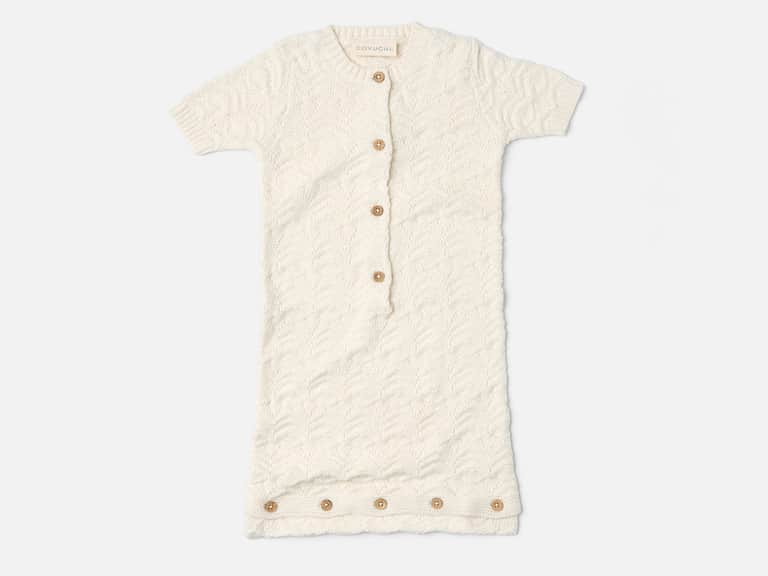
For a concrete example of how details can be read together, the Wren Organic Knit Snuggle Sack is described as 100% GOTS-certified organic cotton, with a rib-knit detail, front button placket, and bottom opening. Its published care instructions call for a cold, gentle wash and low tumble drying. Those specifications describe fiber, construction, and laundering—not a blanket endorsement for every baby or every sleep situation. Caregivers should check the garment’s current size and use instructions, follow safe-sleep guidance, and ask a clinician about any uncertainty.
Knit construction: texture, stretch, and fit
Knit fabrics are made by interlocking loops of yarn. The resulting cloth may stretch more readily than a woven fabric, and its structure can range from close and smooth to open and highly textured. A rib knit, for example, often has visible vertical ridges and some give. A novelty stitch may add surface texture. A finer, lighter knit and a bulky, dense knit can both be cotton, but they will not behave alike.
For wearable nursery layers, fit deserves at least as much attention as the tactile impression. A garment should be used in the size and manner specified by its maker, without alterations that change the fit or closures. Check fastenings for secure attachment and inspect the fabric periodically for stretched openings, unraveling yarn, or damage. Avoid adding cords, clips, or accessories that the item was not designed to use. If a piece no longer fits as intended, retire it rather than trying to make it work for another stage.
Stretch can also change after washing. Knits may lengthen, narrow, or lose their original shape if treated roughly or dried at an unsuitable temperature. This is not merely a matter of appearance: a garment whose dimensions have changed may no longer fit as the instructions intend. Gentle laundering and prompt attention to the care label help preserve the original shape.
There is no need to make the nursery wardrobe complicated. A small set of well-fitting, washable layers can be easier to manage than a drawer full of special-care pieces. Comfort is less about having the most elaborate stitch pattern than about choosing clothes that are easy to put on, easy to clean, and appropriate for the infant and the setting.
Wearable layers and the sleep space are different things
A wearable blanket is designed to be worn rather than left loose around a baby. If considering one, read the product’s instructions closely. Check the stated size range, fastening method, and any guidance about layering clothes beneath it. Do not use it if it is damaged, does not fit as intended, or conflicts with advice from your child’s clinician. Keep the garment’s fabric and weight appropriate to the room and the infant; more layers are not automatically more comfortable.
Most importantly, do not treat a wearable layer as permission to add other items to the sleep area. Loose blankets, quilts, pillows, and soft toys remain separate concerns. Nor should a blanket be tucked around an infant as an improvised substitute for a fitted wearable garment. When a baby is placed down to sleep, the sleep surface and surrounding space should follow current safe-sleep recommendations.
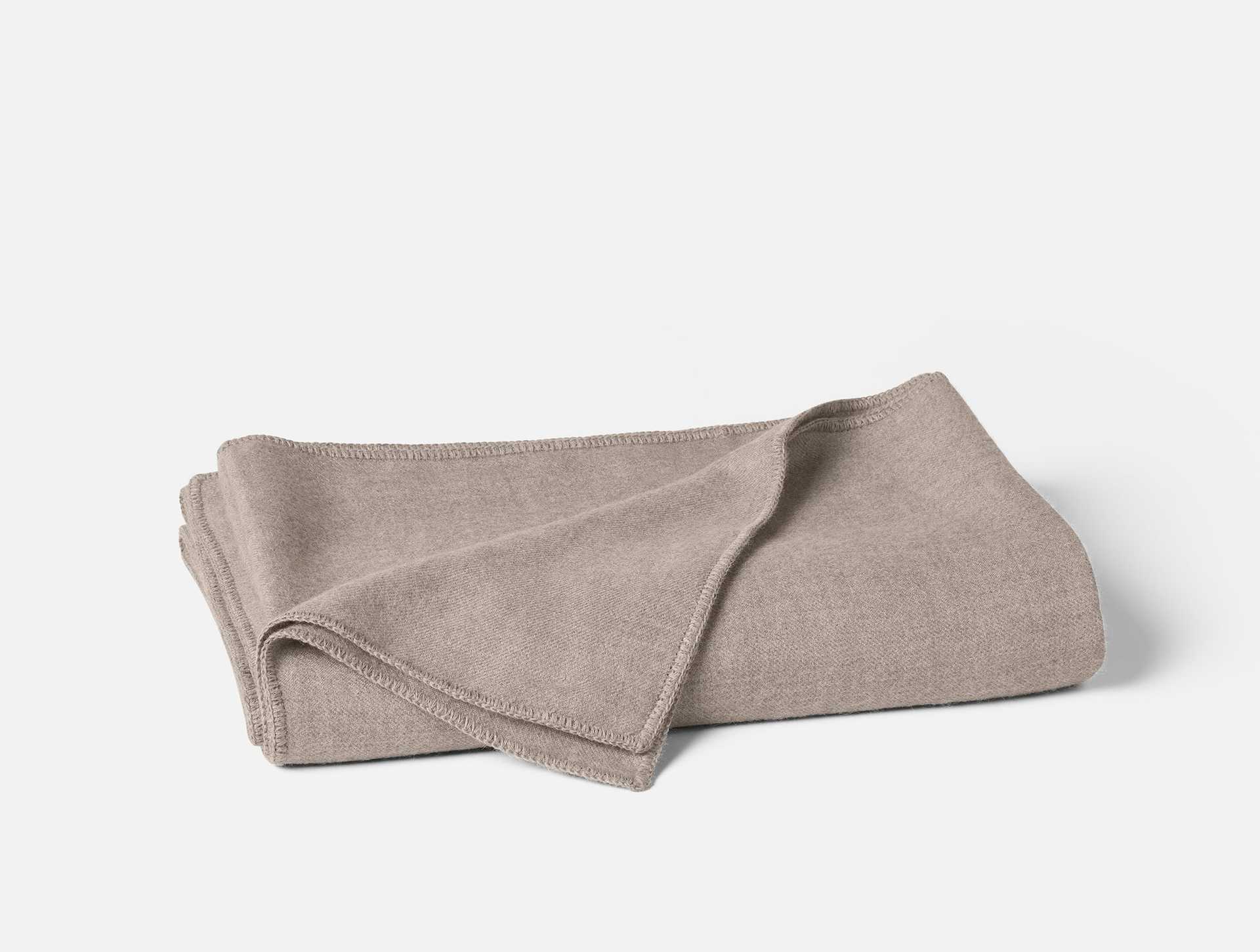
Blankets and throws can still have a place in family life. An adult may use one while holding a baby, or a throw may be draped over a chair when not in use. Keep loose textiles away from the infant’s sleep space, and ensure that a blanket used during supervised time cannot cover the baby’s face or become an unattended hazard. As soon as a caregiver is preparing to put the baby down, the textile should be removed from the sleep area.
Nursery styling often rewards abundance: layers folded in a basket, cushions arranged on a chair, a quilt displayed at the crib’s foot. Those choices can decorate the room without becoming part of the infant’s sleep setup. A tidy boundary between decoration and sleep equipment makes the space easier to understand for everyone providing care.
A practical approach to warmth
Caregivers naturally notice a cool room or a chilly evening and may be tempted to add another layer. Instead of relying on the feel of a baby’s hands or feet alone, which may often feel cooler than the rest of the body, consider the room conditions and the clothing already in use. Follow local safe-sleep advice on temperature and clothing, and consult a clinician if you are worried that your baby is too warm or too cold.
Signs such as sweating, a flushed appearance, or a hot chest can be reasons to reassess clothing and the environment; they are not a substitute for medical advice. If a baby seems unwell or has symptoms that concern you, contact a healthcare professional. Avoid hats indoors during sleep unless a clinician has specifically advised otherwise, and do not use loose bedding to solve a temperature concern.
Layering is most useful when it remains simple and adjustable. A caregiver can choose appropriate infant clothing for the conditions, then follow the instructions for any wearable garment. The number of layers should not be inferred from a product’s cozy appearance or from adult preferences. Babies cannot regulate their comfort in the same way adults can by reaching for a blanket, so the caregiver’s steady attention matters.
Laundering without wearing the knit out
Washable textiles are practical in a nursery, where spills and frequent changes are ordinary. Before laundering a new item, read its care label. “Organic cotton” does not mean every cotton knit can be washed and dried identically. Some pieces tolerate a gentle machine cycle; others may require a different method. The product’s own directions take priority over a general rule.
- Sort thoughtfully. Wash similar colors together and avoid pairing delicate knits with items that have hooks, zippers, or rough surfaces that might snag them.
- Use the stated cycle. A cold, gentle cycle is common on care labels for cotton knits, but confirm the instructions for the particular garment.
- Choose detergent with care. Use a product appropriate for the fabric and follow its directions. Rinse thoroughly if residue is a concern, and avoid adding treatments unless the label and your clinician’s advice support their use.
- Dry as directed. Heat can affect shrinkage, elasticity, and shape. If the label permits tumble drying, use the specified setting and remove the garment promptly. If it calls for another method, follow that instead.
- Check the result. Before the next use, look for loose threads, damaged closures, stretched openings, or a change in fit.
When a knit is damp, handle it gently rather than pulling it into shape by the shoulders or cuffs. Avoid stretching it on a hanger if that could distort the fabric. The point is not to preserve a garment indefinitely, but to keep it in good condition for as long as it remains suitable and correctly fitting.
A calmer nursery, with clearer choices
Choosing textiles can feel like a test of whether one has anticipated every possible comfort. In practice, the clearest decisions are often the most useful: identify what an item is for; read the fiber and care labels; check construction and fit; and keep the infant’s sleep space aligned with current guidance. A breathable cotton knit can be a reasonable option for clothing or an appropriately designed wearable layer, but breathability alone does not establish safety.
Caregivers may also find it helpful to keep a simple record of garment sizes and washing instructions, especially when several people share routines. Store spare blankets and decorative textiles outside the sleep area. Before each sleep, make the same brief check: baby on the back, on a firm and flat surface, with the sleep space clear of loose and soft items. Routine can be reassuring precisely because it removes the need to improvise when everyone is tired.
The best nursery layer is not necessarily the plushest or the most artfully textured. It is the one whose purpose is clear, whose care instructions are manageable, and whose use fits the infant’s needs and established safety guidance. Softness matters. So do air, fit, washing, and a little restraint. In a room prepared for a new person, restraint can be its own form of care.
Quick checklist for caregivers
- Use current safe-sleep guidance for every sleep, and keep loose blankets and other soft objects out of the infant’s sleep space.
- Treat fiber content, knit structure, and “breathable” claims as information about the textile—not as a safety certification.
- For wearable garments, follow the maker’s size, fit, closure, and use instructions; discontinue use if the item is damaged or no longer fits correctly.
- Read the care label before washing, and inspect the fabric and closures after laundering.
- Ask a pediatric healthcare professional or consult public-health guidance when an infant’s circumstances or a product’s intended use is unclear.