Bedding · Materials & Comfort
Choosing a Comforter for Changing Bedroom Temperatures
A bedroom can be a dependable climate or a small weather system of its own. The thermostat says one thing; the window, the mattress, the sleeper, and the hour of night may say another. Choosing a comforter for changing temperatures means looking beyond a label such as “lightweight” or “all-season” and considering how fill, shell, construction, and personal habits work together.
A comforter is asked to perform a quiet balancing act. It should hold enough warmth to make a cool room inviting, yet release heat when the body has warmed beneath it. It should be substantial without feeling oppressive, evenly filled without developing cold corners, and easy enough to maintain that its care instructions do not become a second household occupation. No single specification can promise all of this. Comfort depends on the whole arrangement: the material, the way it is made, the bedding beneath it, and the conditions in which it is used.
That last factor is often the least predictable. A bedroom may be chilly before dawn and comfortably warm at bedtime. A draft from an old window can make one side of a bed feel unlike the other. Partners may disagree about what constitutes a pleasant temperature, sometimes with the conviction usually reserved for matters of principle. And a person who sleeps warm may find a comforter stifling even when the room feels cold to someone else.
The most useful approach is not to search for a universally perfect comforter, but to identify the conditions it needs to manage. Think about the room’s usual temperature range, the way you sleep, how much flexibility you want, and how much care you are prepared to give the bedding. Then consider the materials and construction that might suit that particular combination.
Start with the room—and the sleeper
Before comparing fills, notice what happens in the bedroom over a typical week. Is it consistently cool, or does its temperature rise and fall with outdoor conditions? Does direct sun warm the room in the afternoon? Is there a reliable heating system, or does the room seem to make its own arrangements after midnight? These observations matter because the same comforter can feel pleasantly insulating in one space and overly warm in another.
It is also worth separating room temperature from personal warmth. Some sleepers tend to feel cold, while others warm quickly beneath bedding. A person’s preferred sleepwear, mattress, sheets, and the number of blankets in use all contribute to the experience. Thick pajamas and a dense mattress protector, for instance, can change how a comforter feels. So can sharing a bed. The best comforter warmth is therefore not a property of the object alone; it is a relationship between the object and the person underneath it.
For a practical starting point, keep a short note for several nights: whether you woke warm or cold, whether you pushed the covers aside, and whether the room itself seemed to change. The purpose is not scientific exactness. It is to replace a vague impression—“this bed is never comfortable”—with a pattern that can guide a choice. If the room varies widely but the sleeper generally runs warm, a lighter, breathable layer may be more useful than a heavier comforter intended to solve every possible cold spell.
Fill matters, but not in isolation
Fill is the material inside a comforter, and it has an important influence on insulation, weight, loft, and care. Wool and down are often discussed as if they were rival answers to the same question. In practice, they offer different combinations of qualities, and the right balance depends on the bedroom climate and the sleeper’s preferences.
Wool: warmth with a breathable character
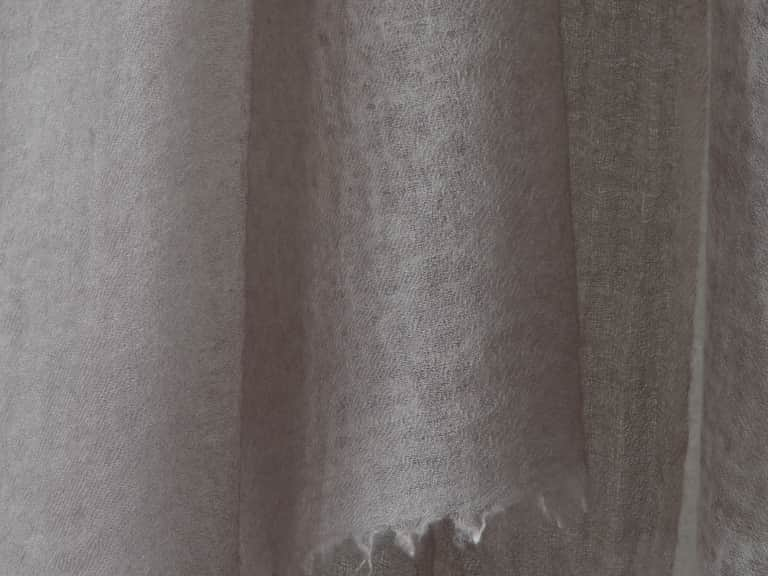
Wool fibers can trap air and provide insulation while also allowing moisture vapor to move through the filling. That combination makes wool an appealing option for sleepers who want warmth without the sensation of being sealed beneath a dense layer. Its natural resilience can help the fill retain its structure, although the comforter’s design and care remain important to how it performs over time.
Wool is not automatically a cool-sleeping solution, nor does the word alone tell you how warm a particular comforter will feel. Fill quantity, shell fabric, room conditions, and the sleeper’s own temperature all count. A wool comforter with substantial insulation may feel too warm in a heated room; a lighter construction may be well suited to someone who wants moderate warmth and a breathable feel. Checking the maker’s guidance on intended warmth is more useful than relying on fiber reputation alone.
Down: loft and warmth for its weight
Down is valued for its ability to create loft: the airy volume that holds pockets of still air and contributes to insulation. A lofty comforter can feel warm without feeling especially heavy, an arrangement that many sleepers find comfortable. Down blends may include other fibers, and their performance depends on the proportions, quality, and distribution of those materials, as well as the construction that keeps them in place.
Specifications such as fill power are useful, but they are not a complete warmth rating. Fill power describes the lofting capacity of down under a defined measure; it does not, by itself, say how warm the finished comforter will feel in a particular bedroom. The amount of fill, the size of the compartments, and the fabric surrounding it also affect the result. A higher number can inform a comparison, but it cannot substitute for the comforter’s stated weight or warmth category.
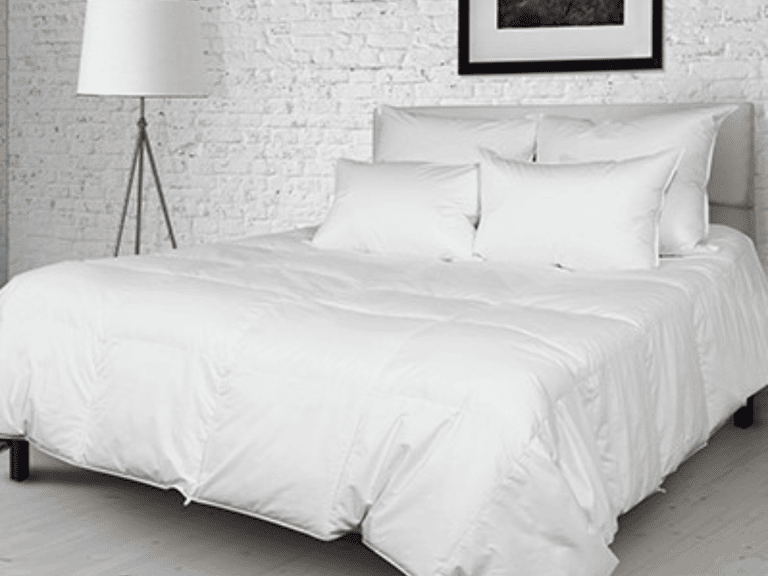
A down-and-milkweed blend offers one example of how fill can combine materials. The Sequoia Midweight comforter uses 70 percent white goose down and 30 percent milkweed fiber in a cotton sateen shell. It is described as a midweight option intended to balance warmth and breathability, with baffled-box construction and corner loops for securing it to a duvet cover. Those details may make it worth considering for someone seeking a moderate layer; as with any comforter, the fit depends on the sleeper and the room.
Down and wool are not the only possible fills, and neither material is automatically preferable. The useful questions are more specific: How warm does the finished comforter feel? How much does it weigh? Does the fill suit the climate and the sleeper? What care does it require? A material’s reputation can begin the comparison, but the full specification should finish it.
Construction is the comforter’s internal architecture
Fill must remain evenly distributed to do its work. A comforter may contain excellent material and still feel uneven if the fill shifts, bunches, or leaves thin areas. Construction—the stitching or compartment system that holds the filling—helps determine whether warmth is distributed consistently across the bed.
Quilting and stitched channels
In a quilted comforter, stitching passes through the layers to create a pattern of contained sections. This helps keep fill from migrating freely and gives the surface a familiar, orderly appearance. The trade-off is that stitching can compress the fill where seams meet. Depending on the design, those compressed lines may feel less insulated than the filled areas between them. The size and shape of the stitched sections therefore matter, as does the amount and type of fill.
Baffled compartments
Baffled construction creates internal walls between sections, allowing fill to retain loft while limiting its movement. This can help reduce thin patches and cold spots, particularly in comforters with lofty filling. Baffles do not make a comforter warm by themselves; they help the fill behave more consistently. The finished result still depends on how much fill is used and how the comforter is designed.
When comparing products, look for clear descriptions of the construction rather than relying on a decorative pattern or broad claim. Terms such as “baffled box” indicate that compartments are designed to maintain separation and loft. They are most informative when considered alongside fill composition and warmth level. A well-constructed comforter should not need to make dramatic claims; its details should explain what the design is intended to do.
The shell and the layers around it
The outer fabric, or shell, is easy to overlook because the fill tends to command attention. But the shell sits closest to the sleeper and contributes to the way a comforter feels, breathes, and moves. Cotton is commonly used for its familiar, relatively breathable hand. Weave and finish matter, too: two cotton shells can differ in texture, density, and drape.
Consider the complete bed rather than treating the comforter as a solitary object. Sheets, duvet covers, mattress protectors, and sleepwear all affect heat and moisture. A thick cover layered over a warm comforter may create more insulation than anticipated. Conversely, breathable sheets and a lighter cover can make a moderately warm comforter more comfortable across a wider range of nights. If you already own a duvet cover, check that the comforter’s dimensions and attachment points are compatible with it.
Corner loops, such as those included on the Sequoia Midweight, can help secure a comforter inside a duvet cover and reduce shifting. This detail is not a warmth feature in itself, but a comforter that stays in place is more likely to feel consistent from night to night. Small construction details sometimes prove more consequential than they look in a product description.
Flexibility for rooms that change their minds
When a bedroom’s temperature shifts substantially, adaptability can be more valuable than choosing the warmest single layer available. A removable duvet cover makes laundering and seasonal changes easier. A lighter comforter paired with a separate blanket gives the sleeper options: the blanket can be added on colder nights and folded back when the room warms. This is less theatrical than buying an all-purpose solution, but it has the advantage of being adjustable.
Some comforters are designed as joined layers, allowing warmth to be changed by separating or combining components. The All-Season Wool Comforter described in the site’s bedding collection, for example, consists of two comforters joined with cotton ties at the corners and sides. Its adaptable format illustrates a useful principle: where temperatures vary, two manageable layers may offer more control than one fixed-weight layer. The details of warmth and care should still be checked for the specific design.
Layering is especially practical when different sleepers share a bed. One person can add a throw to their side or use a separate blanket without forcing the entire bed to become warmer. It can also help during transitional seasons, when evenings begin cool and the room warms later. The method need not be elaborate. A light base layer and one removable extra are often easier to manage than an assortment of blankets that must be rearranged nightly.
There is a limit to layering, of course. Too many covers can feel bulky, shift during sleep, or make the bed difficult to regulate. The aim is not to build a textile fort but to create a small range of choices. One adaptable comforter, paired with a breathable sheet and a removable blanket, can be a more practical system than a single very heavy comforter expected to serve every month of the year.
Care is part of the buying decision
A comforter’s care instructions belong in the comparison from the beginning. Washing requirements affect how convenient it is to use, how often it can be refreshed, and whether it will need professional attention. Some products can be washed at home under specified conditions; others require spot cleaning, airing, or dry cleaning. These differences are not incidental. They are part of the cost—in time and effort—of owning a particular material.
Read the label before washing, and follow the maker’s directions rather than improvising based on the fiber alone. A gentle-looking comforter is not necessarily machine washable, and a familiar fiber does not guarantee that every construction can withstand agitation. Size matters as well: even a washable comforter needs enough room to move freely in the machine and dry thoroughly. If home equipment is too small, a professional service may be the safer option.
Routine airing and prompt attention to spills can reduce the need for frequent full washes, but they do not replace care instructions. A duvet cover can serve as a washable barrier, while helping the comforter stay cleaner between deeper cleanings. Storage also deserves a little thought. A comforter should be clean and completely dry before it is put away; breathable storage is generally preferable to compressing it tightly for long periods, especially when preserving loft matters.
Before buying, ask yourself not only whether a comforter sounds comfortable, but whether its maintenance fits the rhythms of your household. A material with appealing qualities may be less appealing if its care is impractical. The best choice is often the one whose performance and upkeep both feel sustainable in ordinary life.
A concise way to compare options
Product descriptions can be a thicket of numbers, fiber names, and reassuring adjectives. To make comparisons more useful, gather the details that have a direct bearing on your bedroom:
- Typical room range: Is the bedroom cool most nights, or does it change noticeably through the season?
- Personal sleep temperature: Do you tend to wake warm, cold, or comfortable under your current bedding?
- Fill and proportion: What materials are used, and in what percentages?
- Warmth and weight: Is the comforter described as lightweight, midweight, or warmer? Is a fill-weight specification available?
- Construction: Does quilting or baffled compartment design help keep fill evenly distributed?
- Shell and fit: What is the outer fabric, and will the comforter work with your duvet cover?
- Care: Can it be washed at home, or does it require special handling?
- Flexibility: Would separate layers or a removable cover be useful in your room?
When two options seem similar, prioritize the features that solve an actual problem. If your present comforter develops cold spots, construction may matter more than a small difference in fiber composition. If you wake overheated, a lighter warmth level and more breathable surrounding layers may be more relevant than choosing a fill marketed as naturally regulating. If care is a concern, ease of maintenance may outweigh a marginal difference in softness.
Common assumptions worth reconsidering
“All-season” does not mean equally comfortable for every sleeper in every climate. It is a description of intended versatility, not a guarantee that one comforter can replace all bedding. A person in a very cool room may still want an extra blanket; someone who sleeps hot may prefer a lighter option even in winter.
Likewise, “natural” does not automatically mean breathable enough for a particular sleeper, and “lightweight” does not necessarily mean cool. A lofty fill can provide considerable insulation without much mass. A thin comforter can feel warm in a tightly heated room or beneath dense sheets. These labels can help narrow the field, but they should not be mistaken for precise predictions.
Finally, no fill material can correct every problem in a bed. A drafty window, an overly warm mattress, heavy sleepwear, or an unsuitable duvet cover can make a good comforter feel wrong. Before replacing bedding, consider whether a simpler adjustment—changing the cover, reducing another layer, or improving the room’s temperature consistency—might address the discomfort.
The right comforter is a small system
Choosing a comforter for changing bedroom temperatures is ultimately an exercise in proportion. The goal is not maximum warmth, maximum loft, or the longest list of technical features. It is a combination that feels right through the hours when the room changes and the sleeper does not wish to think about bedding at all.
Begin with the room’s actual habits, then account for your own. Compare wool and down by their insulation, breathability, loft, and care requirements, while remembering that finished comfort depends on construction and fill quantity as much as fiber identity. Look for stitching or baffles that help maintain an even distribution. Consider whether a removable cover or separate layer would provide useful adjustment. And give care instructions the same attention you give the materials.
A comforter cannot negotiate with the weather outside the window, or with the person beside you who insists the room is perfectly warm. It can, however, be selected with care: one layer among several, chosen to make the bed more comfortable across the temperatures that actually occur there. That modest, practical aim tends to serve better than the promise of a perfect climate in a box.